I discovered The Hechinger Report today. A product of Columbia Teachers' College and the Hechinger Institute on Education and Media, the site does in-depth reporting on educational news and trends.
A combination of articles, blogs, in-depth reports, opinion and analysis, THR believes "Fewer and fewer reporters at the nation’s largest newspapers and wire services are covering national education issues full time. As a result, critical issues do not get the attention they deserve." They aim to fill the gap.
They caught my eye with this article on the current round of teaching-bashing in the main stream media.
Thursday, May 13, 2010


Support Ed Tech Funding!
Remember, today is Tweet/Blog for Ed Tech day. Ensure the government directly funds educational technology in schools! For more info check here.
Tuesday, May 11, 2010
Just How Big Is It?
The oil spill in the Gulf of Mexico is fast shaping up to be the biggest environmental disaster ever in the U.S. It's hard to grasp the sheer enormity of it.
The Google Earth blog has posted some great links over the past few days related to the oil spill. Google has now created a Crisis Response page, a series of KML files you can download that help visualize the disaster. There is also an interactive map you can use if you don't want to download the file, as well as links to other sources.
To bring the spill even closer to home (so to speak!), Paul Rademacher, an engineering manager for Google, created this plug-in that allows users to compare the spill to various cities, including their own home town. A great tool for helping students (and teachers!) get their head around the sheer size of this thing.
UPDATE: I got curious and started looking around for lesson plans on oil spillls. There are plenty out there, but this one looked especially interesting: students create their own "oil spill" and try to work out methods for clearing it up. Comes with student handouts and full lesson plan. I'm not a science person, but it seems very adjustable for grades 6 on up.
Monday, May 10, 2010
This is a Bad Idea
I don't want to be one of those whiners who complain that, because their pet project isn't being funded, the government in general and the White House in specific is ignoring them and destroying America. It's hard times, and sacrifiices need to be made. It's not "why, me?" but "Why not me?"
However....(you knew that was coming, didn't you?) this one does seem counter-intuitive to everything Obama campaigned on, educationally speaking: moving us into the 21st century, promoting meaningful use of technology, etc.
In its FY11 budget proposal, the Obama administration eliminated the EETT (Enhancing Education Through Technology) program, the only federal source of direct funding for technology education, according to ISTE. The plan is to "infuse" technology through the rest of the federal programs.
Is it just me, or is this a bad idea? It's been my experience that unless something is specifically mandated, monies disappear into the general funds and you never see them again. If you look at the graph at the end of the link above, there is a disturbing trend in technology funding: levels dropped from a high of 700 million in 2002 to only 100 million in 2010.
Only 100 million for technology funding? And we want to lead the world in the 21st Century? Now, apparently, even that is in danger.
But you can help.
On May 12th, ISTE is sponsoring Tweet and Blog for Ed Tech. From the link:
See you on Twitter!
However....(you knew that was coming, didn't you?) this one does seem counter-intuitive to everything Obama campaigned on, educationally speaking: moving us into the 21st century, promoting meaningful use of technology, etc.
In its FY11 budget proposal, the Obama administration eliminated the EETT (Enhancing Education Through Technology) program, the only federal source of direct funding for technology education, according to ISTE. The plan is to "infuse" technology through the rest of the federal programs.
Is it just me, or is this a bad idea? It's been my experience that unless something is specifically mandated, monies disappear into the general funds and you never see them again. If you look at the graph at the end of the link above, there is a disturbing trend in technology funding: levels dropped from a high of 700 million in 2002 to only 100 million in 2010.
Only 100 million for technology funding? And we want to lead the world in the 21st Century? Now, apparently, even that is in danger.
But you can help.
On May 12th, ISTE is sponsoring Tweet and Blog for Ed Tech. From the link:
As part of this effort, ISTE is asking all of those concerned about the future of ed tech to start Tweeting. Tweet about your concerns. Tweet about your successes. Tweet about your needs. Tweet about your future. Where possible, tag Tweets with #edtech or #EETT so the ed tech community can see the strength of its voice. Tweets for #edtech is not just an effort for the 100,000 members of ISTE. It is for anyone who is concerned about the future or how we can use school improvement to improve our nation.
See you on Twitter!
Sunday, May 9, 2010
Living on the Edge with Doug Johnson
I just finished Doug Johnson's new book, School Libraries Head for the Edge. I must admit, I bought it a while ago, and it sat around for a few months. I should have cracked it open sooner.

If you've been reading this blog for a while, you know Doug is a personal guru of mine. Well, not mine personally, but.....oh, you know what I mean! I blogged about the thrill of meeting him at ISTE a couple years ago.
Anyway, I like his very down-to-earth been there, done that, we're in it for the kids approach to libraries. He's idealistic without being impractical, and he's willing to call out the profession when he needs to. I can respect that.
The book is a collection of his "Head for the Edge" columns for the Library Media Connection. And, as I prepare to start building a library program in Mongolia, it's really helping me think through what I'm happy about with my current program, and where I need to improve it.
He covers everything from values to technology, and is seriously re-thinking what it means to be a library media specialist in this age of increasing layoffs. As he says in the intro: "As education changes because of the information explosion, everyone's role in it will change, including yours and mine." The rest of the book explores how to make your library a meaningful, influential and integral part of the school.
This is a must-read, and ought to be on the reading list of every library school; in fact, I'm going to email a couple of my old professors at Pitt and suggest it.
Zonkk: Create your own social networking site
This is brief as I start playing with it, but you might want to check out Zonkk, a new social networking tool which just went public.
I say tool, because rather than being a pre-set up site a la Ning, Zonkk allows you to set up your own social networking site, with a pretty hefty (and slightly confusing) set of features.
The website is currently pretty weak on details or tutorials. I hope they're working on that. But if the photos they give up sites already up and running are anything to go by (and why aren't there links so we can look at them for ideas?), this has potential for schools as a whole or individual classes.
While it's free, there are the inevitable ads on the website you create. It will cost you $15/month to get rid of those.
I'll post more details once I've had time to play with it.
Friday, May 7, 2010
Flying anywhere? This is a GEM!
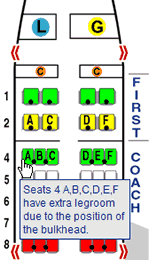 If you're tall like me, flying can be agony, trying to cram your 6'2" frame into those cramped seats. Here's Seat Guru--which gives you seat schemes for any type of aircraft, and recommends which seat you should try to get. I am definitely using this for that 23 hour flight to Mongolia!
Here's the article that lead me to the site, with some good advice for getting a good seat.
Subscribe to:
Posts (Atom)